Powerful systems are often more fragile than they appear, especially when ordinary people refuse to comply.
First produced by the Office of Strategic Services (OSS) in 1944, the Simple Sabotage Field Manual was designed to help citizens living under authoritarian occupation quietly disrupt the machinery of control. Rather than advocating dramatic acts of destruction, the manual focused on something far more subtle: everyday inefficiency, delay, miscommunication, and bureaucratic chaos.
Declassified by the CIA in 2008, the document quickly became one of the most fascinating artifacts of twentieth-century resistance strategy. Its authors (anonymous federal employees working during World War II ) understood something fundamental about power: complex systems depend on cooperation, routine, and obedience. When those habits break down, even the most powerful institutions can begin to falter.
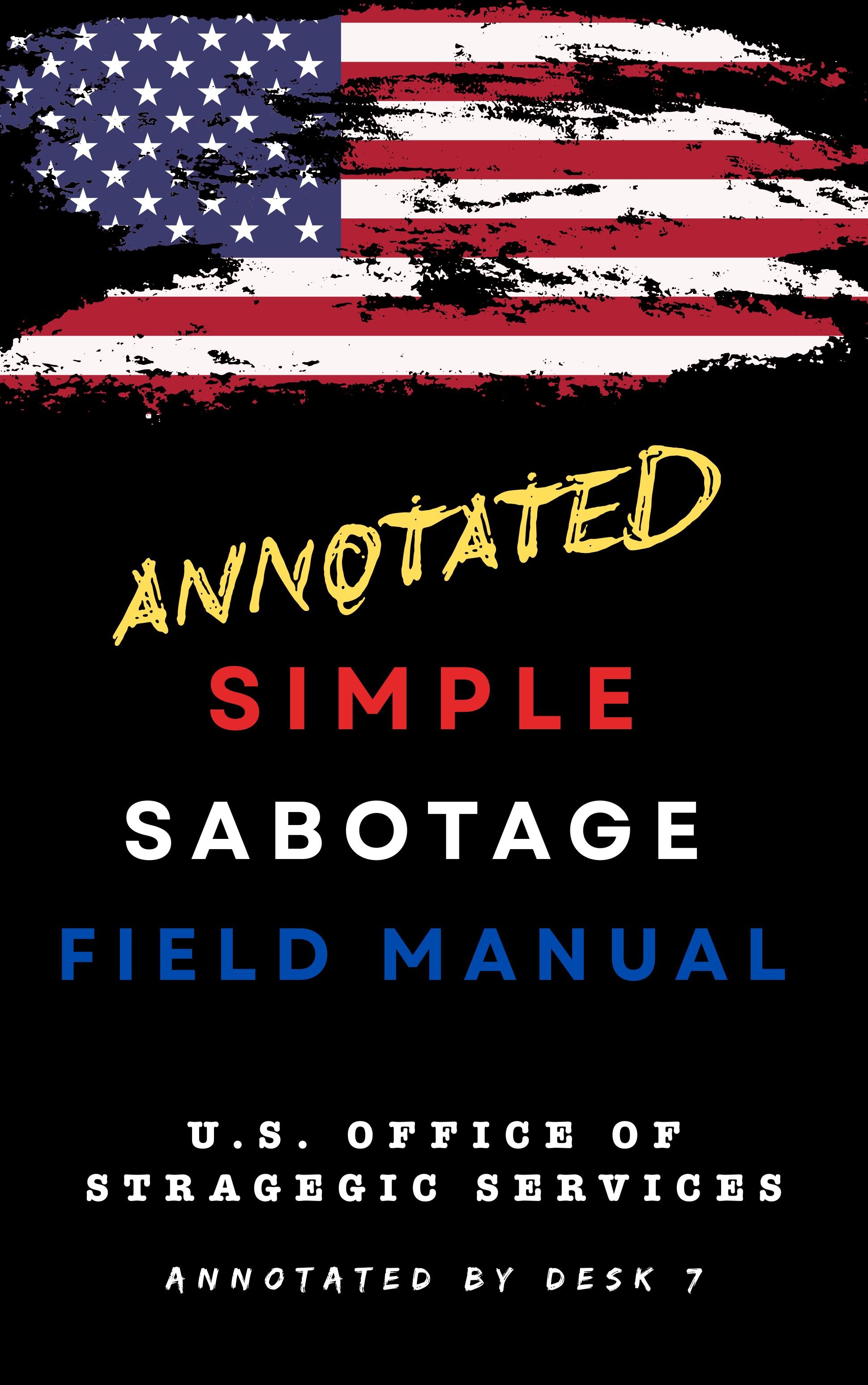
This annotated edition republishes the original OSS text alongside commentary that places its tactics within their historical context while inviting readers to consider their surprising relevance today. From sowing confusion in meetings to slowing production through procedural obstacles, the manual’s strategies reveal how small acts of intentional noncompliance can ripple through large systems.
At a moment when authoritarian tendencies are again rising around the world, the Annotated Simple Sabotage Field Manual offers both a historical document and a provocation. It’s a reminder that resistance does not always have to be loud or violent.
Note: this is an e-book
Powerful systems are often more fragile than they appear, especially when ordinary people refuse to comply.
First produced by the Office of Strategic Services (OSS) in 1944, the Simple Sabotage Field Manual was designed to help citizens living under authoritarian occupation quietly disrupt the machinery of control. Rather than advocating dramatic acts of destruction, the manual focused on something far more subtle: everyday inefficiency, delay, miscommunication, and bureaucratic chaos.
Declassified by the CIA in 2008, the document quickly became one of the most fascinating artifacts of twentieth-century resistance strategy. Its authors (anonymous federal employees working during World War II ) understood something fundamental about power: complex systems depend on cooperation, routine, and obedience. When those habits break down, even the most powerful institutions can begin to falter.
This annotated edition republishes the original OSS text alongside commentary that places its tactics within their historical context while inviting readers to consider their surprising relevance today. From sowing confusion in meetings to slowing production through procedural obstacles, the manual’s strategies reveal how small acts of intentional noncompliance can ripple through large systems.
At a moment when authoritarian tendencies are again rising around the world, the Annotated Simple Sabotage Field Manual offers both a historical document and a provocation. It’s a reminder that resistance does not always have to be loud or violent.
Note: this is an e-book